This week, the Irish Government launched the National Human Rights Strategy for Disabled People 2025–2030, a major step toward recognising the full and equal rights of disabled people in Ireland.
The strategy is rooted in the UN Convention on the Rights of Persons with Disabilities (UNCRPD) and shaped by over 2,000 contributions from the public, most of them disabled individuals. It sets a direction for the next five years, focused on removing barriers and creating real opportunities for participation, inclusion, and autonomy.
At Aspire Ireland, we welcome this strategy and the recognition it brings to the lived experience of disabled and neurodivergent people, including autistic individuals and their families.
The Five Pillars of the Strategy
The Government’s work is organised into five key pillars, each covering a major area of life:
- Inclusive Learning and Education
- Employment
- Independent Living and Active Participation in Society
- Wellbeing and Health
- Transport and Mobility
Across these five pillars, the strategy sets out 23 specific commitments, ranging from inclusive education systems to better public transport access and healthcare that works for everyone.
Each Government Department and State Agency is responsible for delivering the actions within their remit.
What Happens Next
The strategy is not a one-time document. Every two years, the Government will publish a Programme Plan of Action, setting out:
- What actions are being taken
- Who is responsible
- When they will happen
- How success will be measured
The first plan is due within three months of the strategy’s publication.
Oversight will be carried out by:
- The Cabinet Committee on Disability
- A Delivery and Monitoring Committee (with Disabled Persons’ Organisations involved)
- The Disability Participation and Coordination Unit in the Department of the Taoiseach
- The Joint Oireachtas Committee on Disability Matters
Why This Matters to Autistic People
Autistic people in Ireland continue to face persistent barriers, in education, employment, mental health, and independent living. These gaps reflect systemic inequalities that have gone unaddressed for too long.
According to AsIAm’s Same Chance Report 2025:
- 86% say they do not have the same chance as non-autistic people.
- 92% believe the government must legislate for guaranteed access to therapy.
- 55% report difficulty accessing mental health services.
In employment, the picture is also stark. Only around 16% of autistic people are in full-time work, and just 32% are engaged in any form of paid employment. This stands in contrast to Ireland’s general unemployment rate of just 4.45% in 2023 (source)
When it comes to housing and independent living, just 5% of autistic adults in Ireland live alone. The majority — 63% — live with family, and only 7% rent privately (source).
These statistics reveal the scale of exclusion, and the urgency of change.
The National Human Rights Strategy for Disabled People 2025–2030 begins to acknowledge these challenges. It explicitly includes neurodiversity, emphasising that inclusion must reflect a wide range of communication styles, support needs, and lived experiences.
This matters. It signals a more informed and inclusive approach to policy, where autistic people are not treated as an afterthought, but recognised as full participants in society with rights, agency, and value.
Where to Learn More
You can read the full strategy and related resources through the official government website:
- Easy to read format
- National Human Rights Strategy for Disabled People 2025–2030
- Key Commitments Overview
- Other Accessible Formats
- Launch News and Events
Looking Ahead: The National Human Rights Strategy for Disabled People 2025–2030
This strategy lays a strong foundation, but follow-through will determine its real-world impact. Implementation, accountability, and active participation from disabled people must remain central
Aspire Ireland will continue to monitor developments, share updates, and advocate for meaningful progress. If you want to stay updated or be part of the conversation, sign up to our newsletter or follow us on social media. And if you have feedback about the strategy, we’d love to hear from you.
– The Aspire Ireland Team
-> Our Socials
-> Latest Articles
- Why Drama? How Creative Practice Can Build Confidence, Communication and Participation

- My Life, My Script – Your Questions Answered

- From Mentee to Published Author: Clare Martin Launches Her Debut Novel, The Gods of Love

- The Autism Support Gap After 18: Why Services Disappear When Young Adults Need Them Most

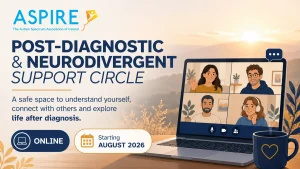
- Post-Diagnostic & Neurodivergent Support Circle — A Space That Starts Where Diagnosis Ends