
Let’s take a look at what happens when support systems built around childhood suddenly stop, and why the years between 18 and 25 deserve so much more than they currently get.
International research has repeatedly identified the move from childhood to adulthood as one of the most difficult periods for autistic people. Services are often organised around education and childhood development. Once school ends or a young person reaches adulthood, those structures can reduce sharply without an equivalent adult system taking their place.
One year a young person may have a school placement, familiar professionals, predictable routines and a support plan. Soon afterwards they may be expected to navigate further education, employment, relationships, finances and adult services with far less guidance.
This matters because 18 is not the finish line it is sometimes treated as. It is the beginning of a period shaped by independence, identity, work, education, relationships and self-directed decision-making. For autistic and AuDHD young adults, this is precisely when appropriate support may make the greatest difference – yet it is often when support becomes harder to find.
We want to talk honestly about why this gap exists, what the Irish data tells us, and why creative, social spaces such as drama programmes are being recognised as one of the meaningful ways to bridge the gap for young people aged 18 to 25.
What We Mean by the “Transition Cliff Edge”
The term “transition cliff edge” describes the sudden reduction or loss of support that can happen when a young person leaves school or reaches adulthood.
School-based supports, therapeutic input and educational planning are generally designed around children and adolescents. Adult services operate differently, separate eligibility criteria, longer waiting periods, unfamiliar application processes. Families can find themselves explaining the same needs again to new organisations, while the young adult is simultaneously managing major changes in routine, identity and expectations.
International studies describe similar patterns across different countries. Autistic young adults frequently experience lower access to services after leaving school alongside reduced participation in education, employment and community life. The precise systems vary from country to country but the underlying problem is remarkably consistent: support reduces before independence has had time to develop.
These are not examples of individual failure. They point to systems that often lack a gradual and coordinated handover between childhood and adulthood.
The Irish Picture
The Irish figures show why this transition deserves urgent attention. Some of the reports we have:
- 55% of autistic adults in Ireland feel lonely all or most of the time
- 69% feel left out of society
- Around 85% are unemployed or underemployed, according to AsIAm and IrisJobs
These figures do not suggest a lack of interest in connection, contribution or meaningful work. They suggest that many autistic adults are encountering environments and systems that do not provide the access, predictability or support needed for sustained participation.
The social structures that once created regular opportunities for contact can also disappear after school, like timetables, familiar classmates, activities and trusted adults. These can be often removed at roughly the same time, with nothing equivalent replacing them.
Aspire Ireland sees this gap directly. We’re receiving a growing number of enquiries from autistic young adults aged 18–25 who’ve aged out of youth supports and have nowhere structured to go.
Why 18 to 25 Is Such a Critical Period
Between 18 and 25, most people are learning how to manage adult responsibilities while also working out who they are, entering further education, applying for jobs, managing money, developing relationships, considering more independent living.
For autistic and AuDHD young adults, these demands don’t disappear because support has reduced. In many cases the demands become more complex. A young adult may be expected to:
- Find and maintain employment
- Navigate further education or training
- Manage appointments, forms and deadlines
- Develop new routines without the structure of school
- Build friendships outside a familiar environment
- Understand adult allowances, assessments and services
- Communicate support needs to unfamiliar people
- Manage sensory demands across workplaces, colleges and public settings
Independence is often treated as though it should appear automatically at 18. In reality it develops through practice, appropriate challenge and reliable support. Removing the scaffolding does not create independence. it may simply make participation less sustainable.
Where the Gaps Show Up Most
The transition gap rarely affects only one part of life. It tends to appear across several areas at once.
Education
Moving from secondary school into further education can mean losing familiar routines and personalised supports. Students may have to explain their needs again while managing a larger campus, more independent study and less predictable contact with staff.
Employment
The difficulty is not necessarily motivation or ability. Autistic young adults may encounter unclear expectations, inaccessible recruitment processes, sensory environments and workplaces that rely heavily on unwritten social rules.
Getting a job and being able to remain in it are also different challenges. Sustainable employment often depends on practical adjustments, clear communication and a working environment that recognises different ways of processing information.
Independent living
Daily living involves far more than moving into a home. It includes planning meals, managing bills, maintaining routines, organising appointments and recovering when something unexpected happens.
These skills are rarely taught as a connected system. Young adults may be expected to manage all of them at once.
Adult services and entitlements
Adult assessments and supports can operate very differently from child services. Families and young adults may face new forms, new eligibility rules and repeated requests for documentation.
The process itself can create an additional executive-functioning burden at a time when energy is already stretched.
Each gap can reinforce the others. Difficulty accessing work can affect financial independence. Limited financial independence can restrict housing options. Reduced community participation can increase isolation. Increased isolation can make returning to education or employment even harder.
AuDHD and the Layered Challenge of Adulthood
For people who are both autistic and ADHD the transition can involve additional layers.
Executive-functioning demands often increase sharply in adulthood. Young adults may suddenly be responsible for appointments, deadlines, finances, travel, paperwork and household tasks without the external structure that previously helped organise them.
A young AuDHD adult may have the ability to work, study or live more independently while still needing scaffolding around time management, sensory regulation, planning and transitions.
Systems built around a narrow idea of independence will struggle to support people whose abilities are strong but uneven or whose support needs change depending on stress, environment and sensory demand. Meaningful support recognise that independence and support are not opposites. The right support can make greater independence possible.
Bridging the Gap: What Meaningful Support Looks Like
Meaningful transition support should begin before the cliff edge arrives. It should include:
- Early, ongoing conversations about adult life, starting years before 18 rather than in the final weeks of school.
- Clear, honest guidance on allowances and assessment processes, so families aren’t navigating a maze alone.
- Pathways into independent living that build autonomy gradually, rather than expecting full independence overnight.
- Social and creative spaces, drama among them, that address loneliness and isolation directly rather than as an afterthought.
- Opportunities to practise independence safely
- Social and creative spaces that reduce isolation
- Recognition of sensory and communication needs
- Support that is led by the young adult’s own priorities
The young people affected by this gap are not lacking in ability or potential. They are being asked to navigate systems that were often designed around childhood support on one side, and assumed independence on the other.
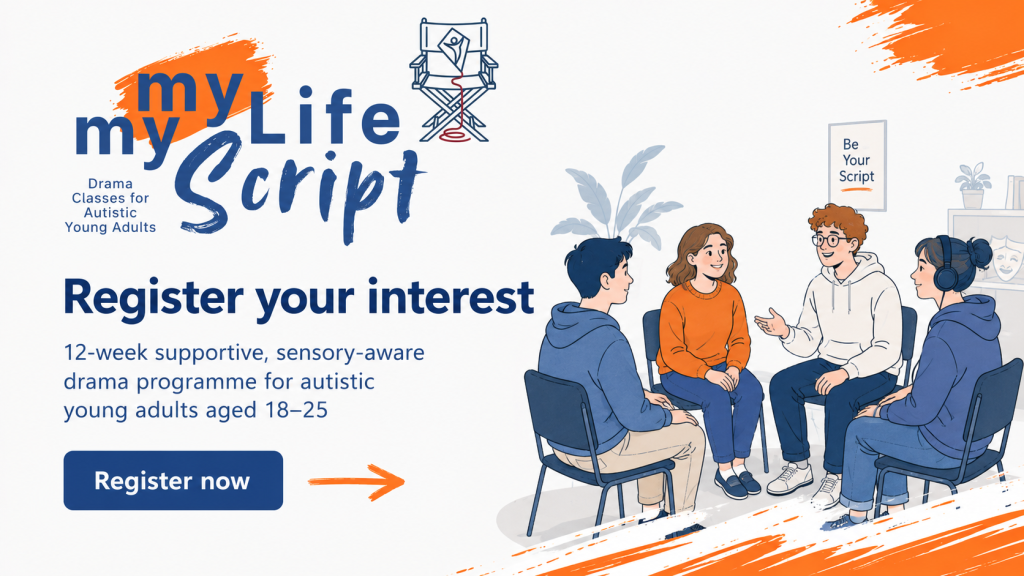
The years between 18 and 25 need something more thoughtful in between. This is the gap that led Aspire Ireland, with support from Rosie & Jim, to launch My Life, My Script, a 12-week drama programme built specifically for this age group. Over the coming weeks, we’ll share more about how it works, starting with why drama specifically can help build the skills this transition demands.
Expressions of interest are now open. Register here
-> LATEST ARTICLES
- Why Drama? How Creative Practice Can Build Confidence, Communication and Participation
- My Life, My Script – Your Questions Answered
- From Mentee to Published Author: Clare Martin Launches Her Debut Novel, The Gods of Love
- The Autism Support Gap After 18: Why Services Disappear When Young Adults Need Them Most
- Post-Diagnostic & Neurodivergent Support Circle — A Space That Starts Where Diagnosis Ends